English| USD
Suggested for you
More currencies
Choose a language
Pigeon Island National Park charges a standardized conservation entry fee for foreign visitors, while snorkeling gear and boat transfers operate on separate local pricing. Understanding the cost structure helps you budget accurately for one of Sri Lanka's most accessible coral reef experiences. The marine park enforces transparent pricing at the Beach Road departure point in Nilaveli.
Quick answer
The Pigeon Island snorkeling price includes a mandatory $10 USD conservation fee per foreign adult, collected at the marine park entrance. This entrance charge covers access to both Greater and Lesser Pigeon Islands within the protected zone. Equipment rental, boat transfers, and guide services operate separately through local operators along Nilaveli Beach, with snorkeling gear typically costing 500-800 Sri Lankan rupees and short boat rides ranging from 1,000-1,500 rupees depending on group size and negotiation.
The dual-island marine sanctuary off Trincomalee's coast enforces one of Sri Lanka's clearest pricing structures for protected coastal areas, with the national park authority collecting a fixed conservation levy before visitors board departure boats. Revenue from the entrance system funds reef monitoring and turtle conservation programs that have stabilized coral cover since the park's designation in 2003. What travelers encounter at the Beach Road embarkation point is a tiered cost model: the government-set park fee, locally variable equipment hire, and negotiable boat transport. Snorkeling mask sets rent for the day rather than by the hour, letting visitors make multiple water entries during the park's operating window from eight in the morning until five in the afternoon. Boat operators quote per-person rates that drop with group size, since the fiberglass craft making the ten-minute crossing carry six to eight passengers regardless of booking numbers. The marine park fee structure treats foreign nationals and Sri Lankan citizens differently, with domestic visitors paying a significantly reduced rate under the national heritage access policy. This two-tier system is standard across Sri Lanka's protected sites and reflects the government's dual mandate of conservation funding and citizen access. The Beach Road collection point issues official receipts, which boat captains verify before entering the marine zone boundary marked by buoys roughly 800 meters offshore. Cost variables depend on whether you arrange snorkeling independently or through a Trincomalee tour operator. Independent arrangements at the beach let you select specific boat captains and negotiate equipment quality, while packaged tours bundle transport from Trincomalee hotels with gear and guidance. The Pigeon Island snorkeling price remains constant across both channels, but total expenditure shifts based on ancillary choices like underwater cameras, life jackets for weak swimmers, and post-snorkel beachside meals at Nilaveli's handful of cafes. The conservation fee applies per visit, so travelers planning multiple days on the reef pay the entrance charge each time they cross into the protected zone. Marine life density peaks in the April-to-September window when northeast monsoon winds subside and visibility extends past fifteen meters. The park's policy prohibits feeding fish or touching coral, violations that carry immediate ejection and potential fines, making the entrance investment contingent on responsible behavior within the sanctuary boundaries.
“Revenue from the entrance system funds reef monitoring and turtle conservation programs that have stabilized coral cover since the park's designation in 2003.”
Beyond the conservation fee, visitors must arrange private boat transport from Nilaveli Beach and optional equipment rentals. Planning for these variable local costs ensures you have sufficient cash on hand for your excursion.
How to spend less
Verdict: For a standard trip including the entrance fee, boat hire, and gear, expect to pay between 50 USD and 80 USD per person depending on group size.
The best arrival window for snorkeling at Pigeon Island is between 08:00 and 11:00. Arriving during this period ensures the clearest water visibility and calmest sea conditions, allowing for a higher-quality experience.
Dry, 28°C–32°C, calm seas. This period aligns with the best conditions for boat transfers and underwater visibility.
High rainfall, 24°C–28°C, rough seas. Marine access can be restricted due to monsoon weather patterns.
—
Visiting early on weekdays provides the quietest environment and optimal sea state before afternoon winds increase.
Verdict: The most favorable conditions occur from May to September, specifically arriving between 08:00 and 11:00 to capitalize on calm, clear water.
Pigeon Island National Park is open daily to accommodate visitors. Planning your visit within these operating hours ensures access to the marine park.
Pigeon Island National Park is located approximately one kilometer off the coast of Nilaveli Beach in Trincomalee. The standard method for reaching the island is by hiring a local boat service from the Nilaveli coastline.
Travel to Beach Road, Nilaveli, Trincomalee via A6 and B424
Local motorboat service from Nilaveli Beach to Pigeon Island
Plan your arrival to the beach between 08:00 and 11:00 to ensure calmer sea conditions and optimal water visibility for snorkeling.
Everything you need to know about pigeon island snorkeling price
The entrance fee is 10 USD per foreign adult as a conservation fee. While this is the official entry cost, travelers often budget extra for boat transport and equipment rental when calculating the total pigeon island snorkeling price.
Beyond the conservation fee, you will need to negotiate or book a boat transfer from Nilaveli Beach. Equipment rental for fins and masks is usually separate, which impacts your total pigeon island snorkeling price.
Official park fees typically apply to foreign visitors regardless of age, though you should verify specific policies for young children at the ticket office. It is wise to have the exact amount in local currency or USD ready to ensure a smooth transaction.
The conservation fee is collected to support the protection of the coral reef and marine life within the national park. By paying this fee, you contribute directly to the preservation of this protected Trincomalee landmark.
Many visitors choose to arrange their boat transport through local operators in Nilaveli before arriving at the beach. Securing a boat early is helpful, but the park conservation fee remains a fixed cost regulated by the authorities.
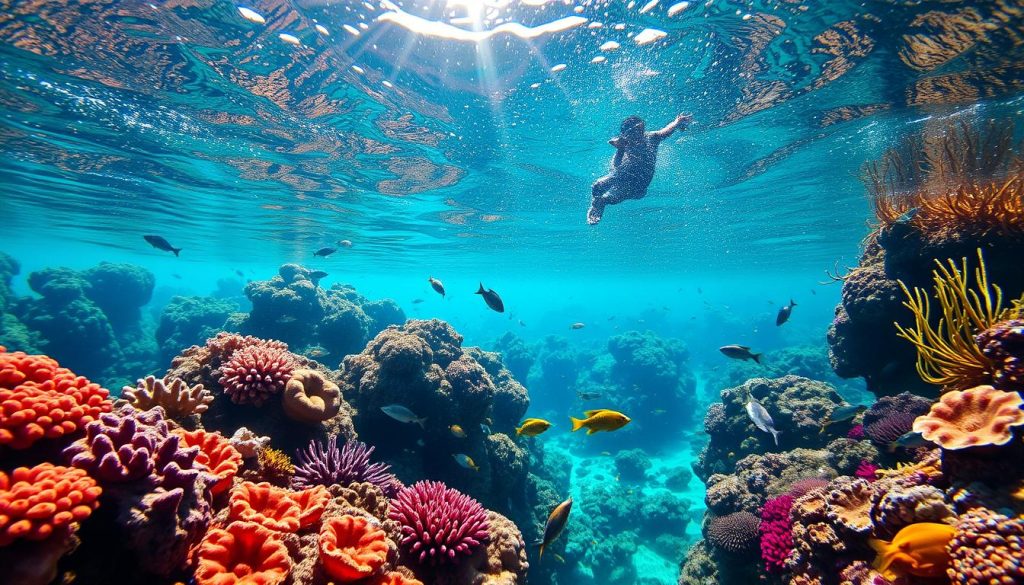
The site is famous for its shallow coral reefs, juvenile blacktip reef sharks, and diverse tropical fish species. Understanding the pigeon island snorkeling price helps you plan your budget for one of the most significant marine ecosystems in Sri Lanka.
To make the most of your visit, aim to arrive between 08:00 and 11:00 for the best water clarity. Bringing adequate sun protection and water is recommended, as facilities on the island are limited.